
Why doesn't anyone upgrade the flexplate?

ripped camel

Dedicated LVC Member
Joined
May 19, 2009
Messages
1,887
Reaction score
0
Location
Sunny Florida
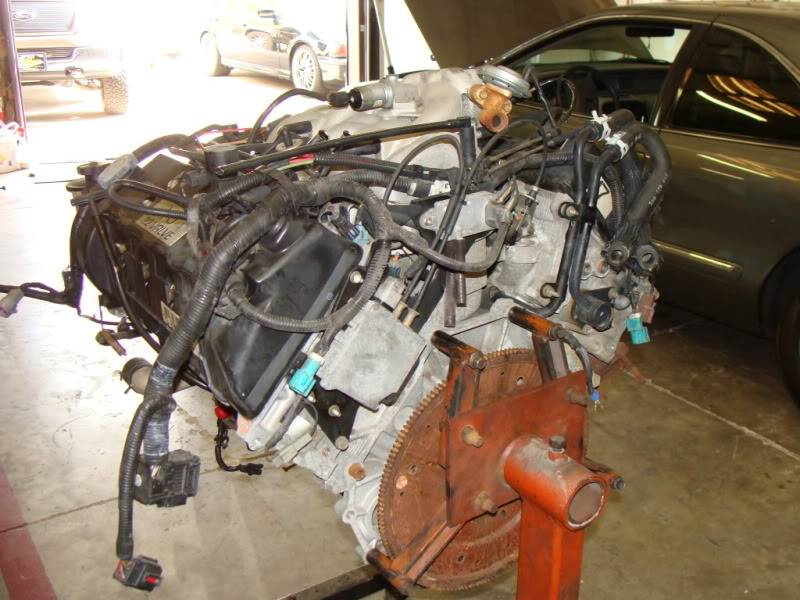
I'm just curious why anyone doesn't upgrade the flexplate in our car? I'm not an expert in auto's by any means, but doesn't a flexplate work the same way as a flywheel would in a manual car? If so why don't we opt for lightweight versions to increase acceleration?

In case I have the wrong term, here is a pic of what I'm talking about. I'm referring to the big rusty wheel on the back of the motor.
46engine.jpg
 
You sould be more worried how much a torque converter will flatten you toe ;)


Jeff
 
Flexplates and flywheels are usually something people only bother to upgrade if they're prone to failure, and I haven't heard of people breaking these..
 
Nothing to upgrade... only issue would be if you were turning so many rpms you mangaged to blow one up... but lots of things in the trans would go first...
 
I heard that knocking a few big chunks out with a big hammer would help acceleration.
 
there is no upgrade for a flexplate. The flexplate is there just for the starter to be able to turn the engine.(flexplate doesent weigh much) Now a flywheel would take the place of a torque converter in an automatic car. A(n) upgraded flywheel is usually stronger and can be made lighter. I believe lighter would make the engine rev a bit faster(accelerate a bit faster)
 
It's all related to mass and there's a difference between a flexplate and a flywheel. Flexplates are designed to allow the starter to start the engine and provide an attachment point for the torque converter. Want a quicker acceleration rate? Use a smaller diameter torque converter (smaller diameter=less fluid and other rotating mass to rotate=quicker engine acceleration). The torque converter makes up the rotational mass difference. With a flywheel, it is designed to have more rotating mass so that the engine will run smoothly while running and while the clutch is being engaged. Yes you can get a lighter flywheel and get faster engine acceleration, but the engine may run "rough" because there isn't enough mass in the lightened flywheel to dampen the power strokes of the engine. I hope this helps out
 

Members online

No members online now.
Back
Top